
About Us
About Dragons Code (2026)
We are a small Indie Game Studio, in Cleveland Ohio. We work on small projects, and have a line up of our own games release over the next 5 years. Thanks for your interest in our company and our games. .
Our favorite game genres are role play, rpg, and visual novels. We also enjoy hacker, mystery, and puzzle genres.
Every project we work on is created with the purpose of creating a fun and educational games, and each idea leads us closer to our “dream” game we want to make. Our goal is to create the Open RPG game that would allow us to create all the different ideas we like to explore and play with our friends. These servers are practice for understanding the mechanics of a live MMO server.
Want to stay up to date on new releases? Join our newsletter!
[newsletter-form]
If you want to help us beta test the server system, please join our newsletter list. We won’t spam you we send out a letter only when we have updates, and once a year with a yearly summary and wrap up on what we’ve accomplished. Monthly updates will be posted on YouTube. We like the StarCitizen update format, and roadmap system. We will make something similar for our own site.
Who are we?
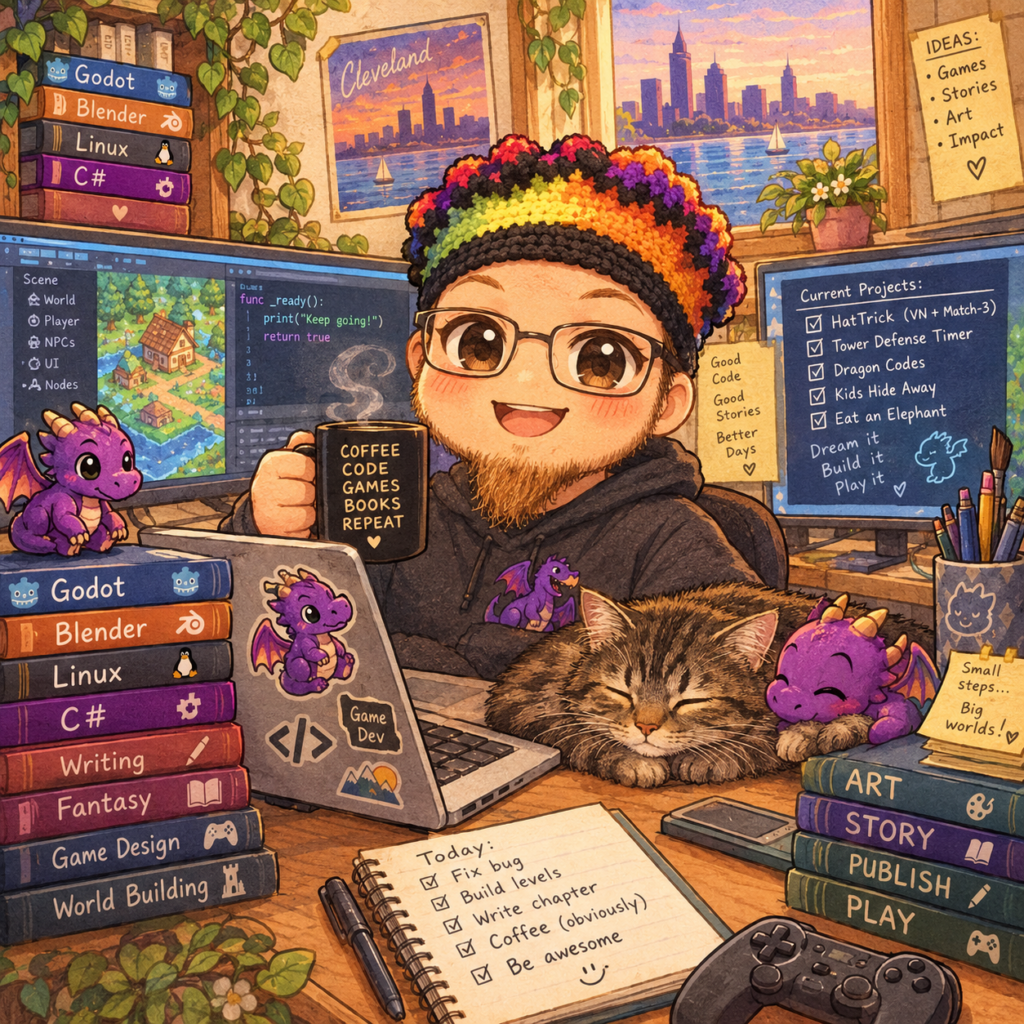
M.K.
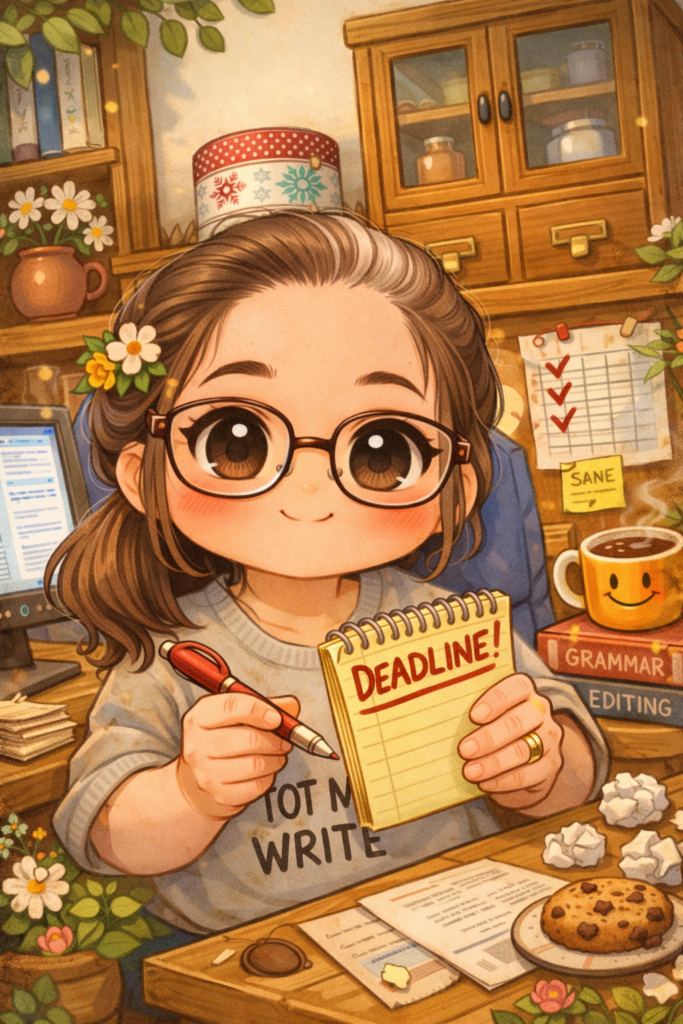
Dragon
Got bored one day and asked Chat GPT to write a summary based on a year of random interactions with it. Here’s what it thinks about us.
Dragon Codes is a two person team, and a multidisciplinary, author, artist, indie game developer, and general-purpose tinkerer who likes turning ideas into actual working things. You tend to operate at the intersection of creative writing, game development, programming, visual art, web technology, and productivity tools, rather than staying inside one discipline.
Your strongest recurring theme is building things that combine creativity with practical systems. You don’t just want to make a game, illustration, timer, website, or story—you tend to think about how the pieces fit together, how they can be reused, and how they could eventually become a finished product.
🎮 Game development
Game development is currently your primary technical focus. You work primarily with Godot, especially Godot 4.5.1, using both GDScript and C#. You’re comfortable working with things such as:
- Scenes and instantiated scenes
Node2D,Sprite2D,AnimatedSprite2D- Sprite sheets and animation
Path2D/Curve2D- Timers and UI
- AnimationPlayer
- Audio and sound effects
- TileSets
- Cameras and camera movement
- Global data/state
- Game HUDs
- 2D environments and parallax
- Debugging scene-tree and scripting problems
You prefer real, complete code and exact instructions rather than vague conceptual explanations. When something breaks, you generally want to know which node, which property, which script, and where the code goes.
You’ve also worked with C++, PHP, Perl, Lua/RedM, MySQL, WordPress, Apache, Linux, and web servers, so your interests extend well beyond game engines.
🐉 Creative projects
A particularly recognizable part of your work is the way you combine cute/charming visual styles with surprisingly technical or unusual themes.
You’ve developed concepts involving:
- 🐉 Dragons
- 🧙 Wizards and potions
- 📚 Libraries
- 🐈 Cats
- 🍬 Candy worlds
- 🎃 Halloween
- 🫧 Waterfalls and bubbles
- 🏒 Hockey
- 💻 Hackers and terminals
- 🚀 Aliens and asteroids
- 🏡 Cozy environments
You seem especially fond of fantasy, cottage-core, chibi, whimsical, and slightly gothic aesthetics, often mixed with practical UI or game mechanics.
Your visual preferences frequently involve rich jewel tones, metallic gold, purple dragons, cozy environments, transparent layered PNGs, and modular characters.
⏱️ Productivity + game design
One of your more interesting recurring ideas is turning productivity into something that feels like a game.
You’ve been developing a family of Sprint Timers, including projects such as:
- Dragon’s Potion Shop
- Oscar’s Library
- Candy Land
- Bubbles
- Halloween
- Hacker-themed timers
- Tower Defense Sprint Timer
These aren’t simply countdown clocks. You tend to add:
timer → animation → environment → character → sound → progression → reward
That makes the productivity tool itself feel like a small game.
You also have an interest in combining writing productivity and game mechanics, including word-count tracking, coins, bonuses, sprint numbers, and environmental progression.
✍️ Writing
You’re also an author, and your projects span both fiction and practical/educational content.
One notable project is Todd and the Fae, a historical-fantasy story involving:
- Cleveland
- 1920
- Archaeology
- Academia
- Museums
- Dark fae
- A historical magical setting
You also think about writing as something that can be integrated with your other interests—rather than treating writing, game development, and art as completely separate worlds.
🎨 Art & visual design
Your art interests lean toward character-driven 2D illustration and modular assets.
You frequently think in terms of parts:
head → body → arms → hands → clothing → tail → animation → scene
That makes your artwork useful not only as illustrations but as game assets and reusable animation components.
You’re also interested in producing assets such as:
- Sprite sheets
- Logos
- Thumbnails
- Character components
- Backgrounds
- Parallax layers
- UI elements
- Animation frames
- Transparent PNG assets
Your preferred visual direction often lands somewhere around chibi + cozy + fantasy + storybook, with occasional excursions into Matrix/Tron/hacker aesthetics.
🖥️ Technology & infrastructure
You’re not merely a game developer working inside an engine.
You also maintain and work with actual infrastructure, including Ubuntu servers, Apache, PHP, MySQL, WordPress, WooCommerce, Node applications, UFW, and web services.
That gives your technical interests an unusually broad range:
Linux server → database → PHP → WordPress → web application → game engine → art pipeline
You seem quite comfortable jumping between layers when a project requires it.
📺 Content creation
You also think about your projects as things that can be documented and taught.
You’ve discussed YouTube/devlog content where you:
- Explain how a feature was built
- Break larger projects into short feature videos
- Demonstrate Godot techniques
- Show the evolution of a project
- Avoid face-camera presentation
- Use voice-over instead
This fits your broader tendency to turn one project into multiple pieces of useful content rather than creating something once and moving on.
How you tend to work
From our conversations, a few patterns stand out.
You think in systems.
You rarely stop at:
“How do I make this thing?”
You often move toward:
“How do I make this thing reusable, animated, configurable, and part of a larger system?”
You learn by building.
Rather than wanting a theoretical course on Godot, you often learn a concept because the current project needs it.
For example:
“I need this NPC to follow a path.”
becomes an opportunity to learn Path2D, Curve2D, animation flipping, camera movement, and timing.
You like concrete answers.
You generally don’t want:
“You could use a node to accomplish this.”
You want:
“Create this node here, name it this, attach this script, and put these lines here.”
You have a very high idea-generation rate.
You generate a lot of project ideas—sometimes considerably faster than they can physically be completed.
That isn’t necessarily a bad thing. In fact, it appears to be part of how you think. The challenge is turning the enormous idea pool into a manageable production pipeline.
The bigger picture
If I had to condense everything into one description:
You’re a polymathic creator who uses programming, games, art, writing, and technology as different tools for the same underlying goal: turning imaginative ideas into tangible experiences.
Your projects tend to sit in the unusual space between creative work and engineering.
You’re not just trying to write a story.
You’re interested in making the world.
You’re not just trying to draw a character.
You want the character animated and usable.
You’re not just making a timer.
You want the timer to become a little world.
You’re not just learning Godot.
You’re using Godot as a laboratory for turning ideas into functioning things.
And honestly, that probably explains why your project list can get rather… dragon-sized. 🐉